


Restorative Dentistry in Fort Wayne, IN
Bringing Function and Strength Back to Your Smile | Family & Cosmetic Dentist Near You
What Is Restorative Dentistry?
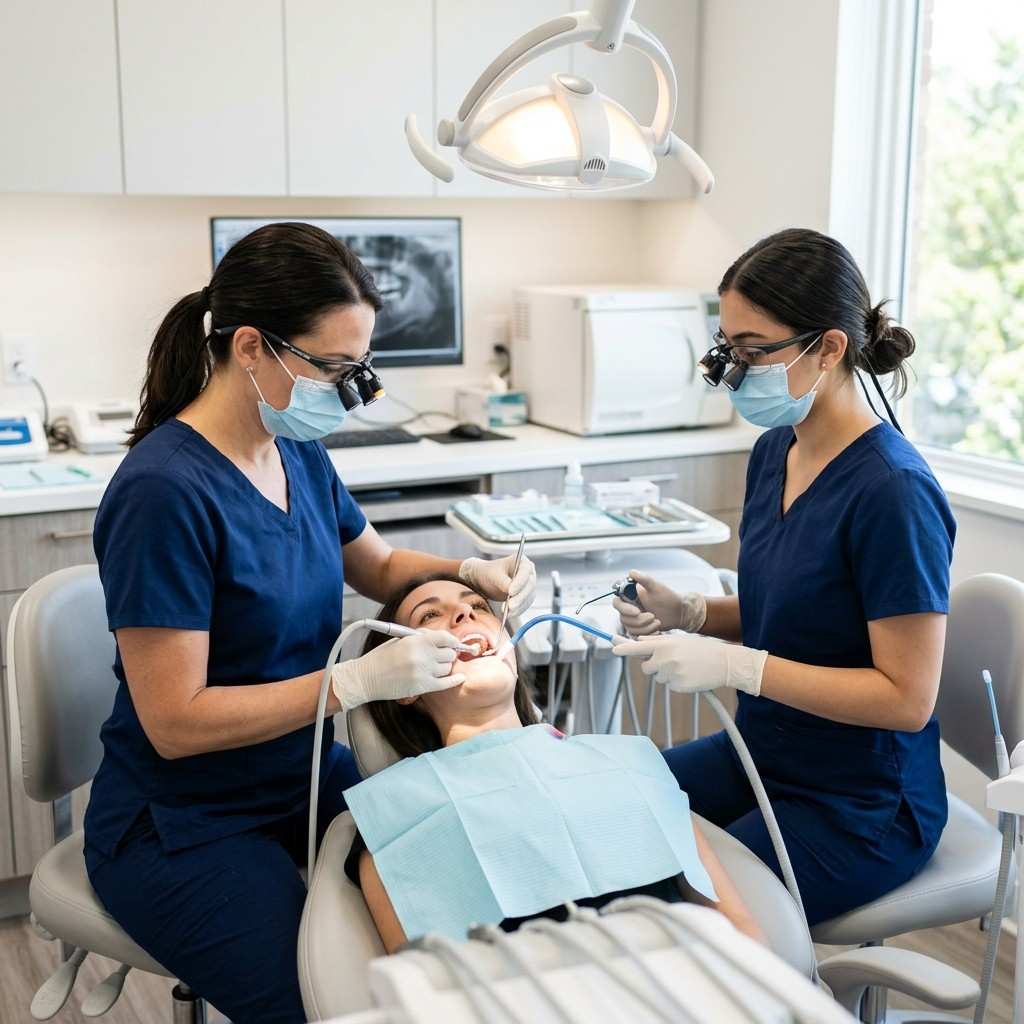
Restorative dentistry covers treatments that repair teeth damaged by decay, injury, or simply years of use, bringing back both function and appearance rather than just patching over a problem. Depending on how much of the natural tooth remains and how many teeth are affected, that might mean something as simple as a filling or as involved as a full-mouth reconstruction combining several treatments together.
We provide restorative care to patients from Fort Wayne, Georgetown Place (46815), Maplecrest Road (46815, 46835), and New Haven (46774). If you've been putting off addressing a damaged tooth and searched "dentist near you" hoping for options rather than a single fix, this page walks through what's actually available at Maple Dental.
Why Fort Wayne Families Choose Us for Restorative Dentistry
- An honest assessment of which restoration actually fits your tooth
- Treatment plans that consider your whole mouth, not just one tooth
- Materials chosen for durability in the specific location they're needed
- Coordination across multiple restorations when more than one tooth is involved
- Clear cost breakdowns before committing to a treatment path

Matching the Repair to the Damage
A small cavity and a badly cracked molar don't call for the same fix, and figuring out where your tooth falls on that spectrum is really the first step in restorative treatment. Some teeth just need a small amount of material added back, while others need a full cap or, in some cases, replacement entirely if the natural tooth can't be saved.
Here's a look at the main restorative options and when each one typically applies:
Dental Fillings
For decay or minor damage that hasn't compromised most of the tooth, a filling restores the area directly. This tends to fit:
- Small to moderate cavities caught during a routine exam
- Minor chips or wear that don't affect the tooth's overall strength
- Cases where enough healthy tooth structure remains
- Patients looking for a single-visit, straightforward repair
Crowns & Bridges
When a tooth has lost too much structure for a filling, or a tooth is missing entirely, a crown or bridge steps in. This route often applies to:
- Teeth weakened after a root canal
- Large, failing old fillings
- One or two missing teeth with healthy neighboring teeth
- Patients who'd rather avoid a surgical procedure

Root Canal Therapy
If infection or decay has reached the inner pulp of a tooth, a root canal treats the problem at its source rather than removing the tooth outright. This is typically recommended when:
- Deep decay has reached the nerve
- A tooth has become infected or abscessed
- Saving the natural tooth is still realistic
- Symptoms like sharp pain or prolonged sensitivity are present
Dental Implants
For a tooth that's already missing or beyond saving, an implant replaces it from the root up. This tends to fit patients who:
- Have adequate jawbone to support an implant
- Want a permanent, non-removable solution
- Are prepared for a multi-month treatment timeline
- Are replacing one or a few individual teeth
Restorative Dentistry FAQs
Get the Restorative Care You Need
A damaged or missing tooth rarely improves without treatment, and understanding your options upfront makes the decision far less overwhelming. Our Fort Wayne team at Maple Dental will walk through what's realistic for your specific tooth and help you land on the right fix.